Ancient Empathy in a Modern World

The Grace of Knowing: Life as a True Empath
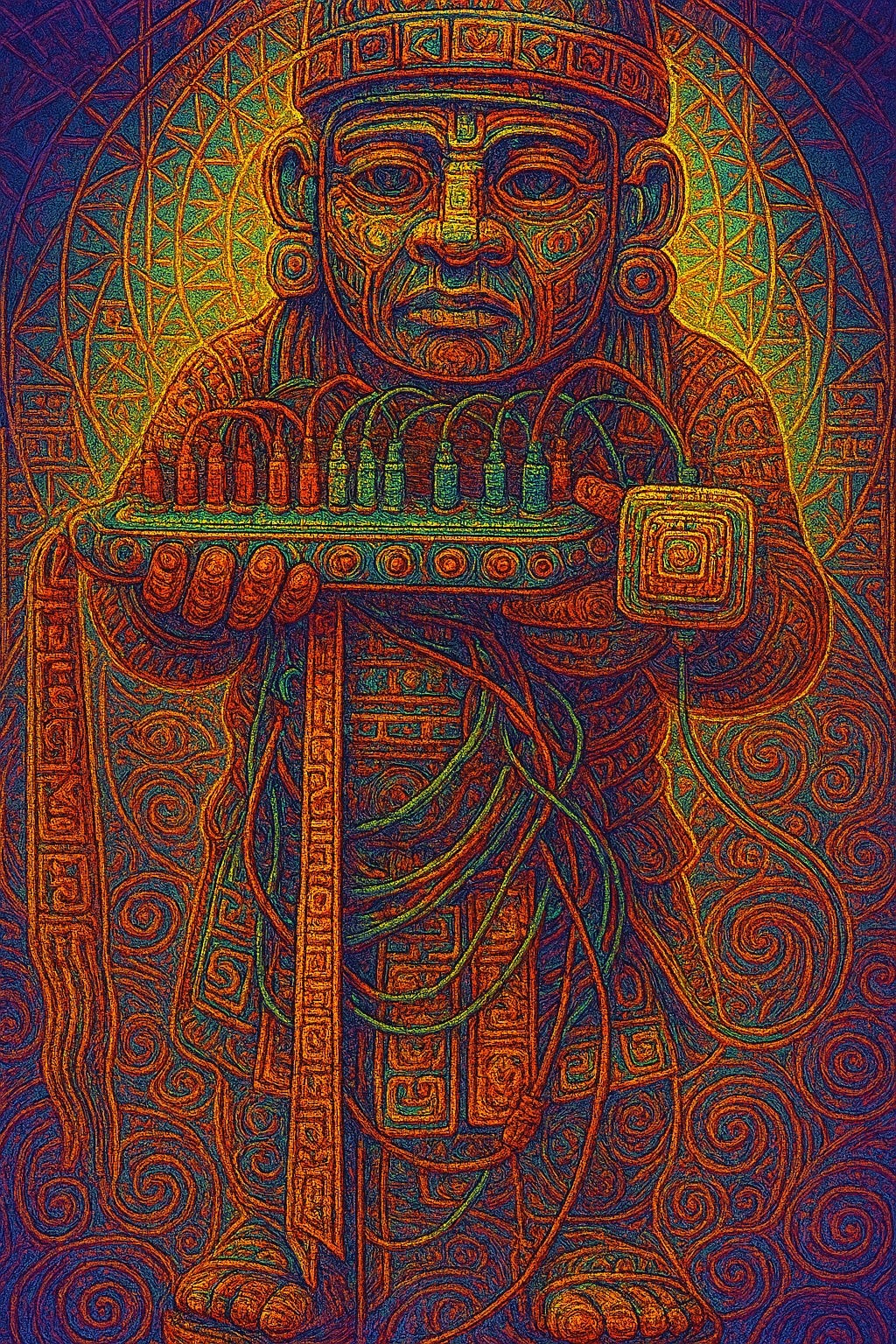
Empathy is not a modern virtue.
It is ancient survival code—primal, pre-verbal, essential. Long before civilization, we relied on it. To hunt in silence. To comfort with a glance. To sense threat without words. To move as one. It was crucial to keep quiet. To listen. To feel the wind shift, sense the coming weather, anticipate danger. Our ancestors didn’t need chit-chat, senseless chatter clogging up the day. A twitch of muscle, a flick of the eyes, a shared breath—these were language enough. To intuit each other’s thoughts, anticipations, reactions, and sensations as your own wasn’t weakness—it was how we survived. For hundreds of thousands of years, this was us: the human tribe.
But in today’s world—
In Babylon, in the dissolving of the tribe, in the temples of capitalism and the digital dominion, in courtrooms, campaigns, and climbing corporate ladders—Empathy has become an inconvenience. And it’s being eradicated fast. For modern “financial survival,” it’s deemed a liability. We’ve built systems where the less you feel, the more you’re rewarded. Where detachment is strategy. Where cruelty is called strength. Where emotional numbness is mistaken for leadership.
The Babylonian order favors the cold-blooded. It selects for those who can ignore suffering, exploit softness, commodify connection. And slowly, empathy is being bred out—not by nature, but by design. Did you know that C-suite executives and upper management consistently show lower levels of empathy than the general population? Studies reveal that as power increases, empathic accuracy declines. CEOs and senior leaders are often insulated from the consequences of non-empathetic behavior by layers of arbitrary titles and false hierarchy, vastly overestimating how “supported” the sentiment is by their subordinates. For example, if you’re best friend at work for 10 years (kids do sports together, bbqs in the backyard kind of friendship) is suddenly competition for a promotion we humans in all our wisdom will quietly try to usurp, undermine, beat the perceived completion. Friendship often takes a back seat to financially gain…this makes me worry about the human tribe.
In the corporate systems of Babylon, emotional detachment isn’t a flaw—it’s a feature. The less you feel, the higher you rise. Meanwhile, those still wired for collective feeling—the empaths, the soul-listeners—find themselves overwhelmed, under-protected, and spiritually exiled from a system that no longer values what once kept the tribe alive.
Back in my corporate days at Columbia Distributing in Seattle, I felt this every single day but at the time I wasn’t sure how to name it. And like many of you, I embodied my natural tilt toward empathy as feeling separate or “different” than everyone else and falsely tricked myself into thinking that it was a personality flaw. This is the danger of being an empath in a non-empathetic environment. It can become a form of self-violence and the implications are vast and complex. Many of us get small, don’t speak up, stay under the radar and try to blend in; while inside we’re hurting, screaming, diminishing.
Outwardly, I was deemed a “hypo”…or High Potential. What a degrading term, suggesting my value was yet to be affected and only through their holy training could I reach self-actualization. It’s a term widely used in corporate hell, to rank human capital.
Externally I was preforming 3x better than my cohort, invited to lead C-suite DEI training meetings and summits, winning incentive trips, jumping gracefully through their circus hoops. Inside I was lost and confused, robotically embodying characteristics and behaviors I deeply disagreed with. And it made me sick. What I mean by sick…It started slow then built up. Just a low, tired, under-stimulated, cold feeling that became depression, self medicating, and feeling lost and paralyzed. I felt trapped. Until I finally escaped. More on that soon….
But some of us didn’t adapt.
Some of us still carry the old code. We can physically feel emotions cascade hormones through specific places in our bodies, like the heart blossom of an empathetic connection or the adrenaline dump in the gut when encountering rejection or even witnessing others get rejected. Our bodies still respond like the tribe is counting on us to sense danger. Our hearts still break open when we walk into a room full of silent pain. We didn’t evolve past empathy—we carry the torch.
And now we suffer for it—
Because this world no longer honors what once made us human. Having highly attuned senses if often something we don’t know is unique, we assume everyone feels that way and is hegemonizing into the stoic, socially acceptable version of displaying “appropriate behavior”. I believe each human is somewhere on the emotional spectrum…none better or worse. However I think we all get a little colder every day when something emotionally triggering happens and as we walk through life, some of us intentionally turn off the emo. I tried to not “feel” when I was little. As a true empath, that was a futile mission.
There are people who can read the room. And then there are those who become it. Not metaphorically. Not politely.
Viscerally…
For the true empath, perception isn’t observation—it’s absorption. You walk into a space and suddenly you are the heartbreak in the man withdrawing in the corner, the anxiety in the barista, the shame in the teenager faking indifference. You’re swimming in other people’s nervous systems. And it often takes slow, layered revelation—years—to realize:
Not all of this is yours. They’ll dismiss it with a label—a “highly emotional person”, but that’s just dumbing it down. The complexity is misunderstood and therefore undervalued. What they don’t want to deal with, may actually be a gift.
A Nervous System Without Borders
Anthropologists have long observed the concept of porous identity within many indigenous and animist cultures, where the boundary between self and other is not rigid, but permeable. In these societies, the individual is not viewed as a sealed unit but as part of an interconnected field of relations—with the land, ancestors, animals, spirits, and the elements. The self is not a fortress to defend, but a conduit through which the world flows.
For people with high emotional sensitivity—often referred to as empaths—this permeability is not a philosophical abstraction. It is a lived, somatic experience. Empaths routinely register subtle emotional cues in others, often before those emotions are consciously acknowledged. A glance, a shift in posture, a suppressed sigh—these are felt not as background noise but as visceral information. The empath’s nervous system acts like a finely-tuned instrument, resonating with the emotional frequencies around them.
I am not a doctor, or a scientist or copying and pasting from AI…I am just an average human and interested in anthropology. So…with that disclaimer, I am reminded here about the experiment where hateful / loving words were spoken to water, it was frozen then examined under a microscope. The “love” water formed snowflake crystals and the “hate” water was chaotic and fractured. It’s just logic telling me that if our bodies are 70% water, and simple words can effect it, then for the real empaths there are complex implications of what we may be sensing, feeling, experiencing throughout life. Theres something yet to be understood by modern science that is remembered somewhere under our cultural imprinting, our programming, our all-too-human illusory life experiences.
This heightened attunement parallels the worldview found in many non-Western ontologies, where personhood is relational and the soul is not confined within the skin. Within the Western framework, however—one shaped by dualisms such as self vs. other, subject vs. object, mind vs. body—this level of perceptive emotional sensitivity can be pathologized or misunderstood. The modern world encourages firm boundaries and rational detachment, yet those with porous fields find themselves absorbing what others deflect.
The cost of this openness is significant. Empaths often carry emotional burdens that do not originate within themselves. They may cry for others without knowing why. They may feel exhausted in crowded environments or overwhelmed by unspoken tension. If a close friend is suffering, the burden is compounded for the empath. Witnessing suffering becomes suffering. Yet to shut down perception—to close the gates—can feel like a betrayal of their core nature, plus it’s not possible —I’ve tried. Sensitivity is not merely a trait; it is a form of ancient perception—what some might call empathic intelligence.
In this light, empaths are not broken or overly emotional. They are carriers of a deeper, older way of knowing—one aligned with the relational frameworks found in indigenous knowledge systems, where everything is alive, responsive, and interconnected. Their challenge is not to toughen or shut down, but to learn how to navigate a world that has largely forgotten how to hold this kind of wisdom.
The Lady Leo Oracle…or “too much”?
For me, it’s big, huge, overwhelming feelings—spanning the spectrum. Thinking back to our African Diaspora class, I’d be the one in the back crying about the souls lost in unspeakable conditions below the slave ship’s deck—appalled that the rest of the class was nodding off. Or my heart would electrify in a crowd at a music festival, knowing everyone around me was free for a moment. I’d be the softie tearing up at an old couple holding hands, knowing that decades of togetherness takes patience and grace. Ram Dass might say: “We’re all just God in drag.” And for the empath, the drag show never ends. You’re constantly undressing yourself only to find another’s costume underneath.
Has Science Named This?
Neuroscience flirts with labels: mirror-touch synesthesia, high sensitivity, emotional contagion. Psychology brands it—Highly Sensitive Person (HSP)—as if that could contain the experience. But none of these touch the sacred strangeness of it. They don’t explain the download—that sudden, bone-deep knowing of someone’s soul data before a word is spoken. They don’t speak to the feeling of walking into a room and sensing the argument that happened an hour ago. They don’t touch the ancestral ache of feeling someone else’s heartbreak in your own body like it’s your own echo. What they call “sensitivity” might just be the oldest human technology of all.
Before the written word, before language could wrap around an idea and pass it along—there was presence. There were eyes. There were silent fields of perception, woven between bodies. We didn’t evolve as isolated intellects. We evolved in tribes. In tight circles around firelight, with nervous systems braided like roots beneath the forest floor. We survived because we felt each other. Because we could look into another’s eyes and instantly know: This is danger. This is trust. This is grief. This is the moment to act. When stalking prey, no words could be spoken.
A glance held the weight of a plan. A breath had to say now. In childbirth, in battle, in famine and fire—we shared a nervous system long before we shared belief systems. What we now call “telepathy” was once just… survival. What we now dismiss as “too emotional” was once the signal that saved the tribe. And you, empath, are still running that ancient code. You are not “too sensitive.” You are tuned to a frequency modernity has mostly forgotten. You read nervous systems like sacred scrolls. You translate the ineffable into the known—without being asked, without being thanked, and often, without being believed. But you are necessary.
Because in a world seduced by disconnection, you still feel the hum of the field that holds us all. And when you ache with someone else’s sorrow, or light up from their joy, you’re not weak— You’re remembering something the rest of us buried to survive industrial life. You’re proof that the tribe still breathes. That our roots still touch beneath the surface. You are not just sensitive. You are an antenna. A soul-listener. A carrier of an ancient, sacred skill set disguised as fragility in a culture of numbness.
The Beautiful Burden
To be an empath is to live in a kind of sacred holder of knowledge—one you didn’t choose but can’t renounce. You see people—not just their image, but the thing behind the eyes. The hunched shoulders? I can feel my heart ache with the shame they carry. A sigh across the room? Suddenly, my own burdens rise up uninvited. A glance from a lover, dismissed by their partner? I feel the adrenaline spike in my stomach for her.
It’s…
The father laughing too loudly at dinner, desperate for approval. The friend who says “I’m fine” while their eyes scream something else. The joy that seems suspiciously forced. And because you see it—you feel it. This knowing, this seeing, is a gift—but also a burden. Because once you feel it, you often try to fix it. Or carry it. Or transmute it in your own nervous system like some holy alchemist. That’s where it gets dangerous.
I’ve walked many roads in this life—some sacred, some reckless, all of them rich with feeling. I’m a deep feeler, a complex thinker, and a lifelong observer. My path has been punctuated by moments of raw, transcendent emotion—experiences that pierced the veil and left me forever changed.
I’ve known addiction from the inside. So when I see Suzie reach for her fifth glass of wine, I don’t judge—I feel the weight behind her shoulders, the quiet storm of shame she’s trying to drown. I’ve been every character in the family drama, ridden the relationship power seesaw in both directions, and lived in corners of the world that taught me more than books ever could.
I’ve witnessed life through so many lenses that I can now feel into a shared field—the emotional current that hums beneath culture, class, and circumstance. That current is what makes us human. It’s the ache, the joy, the longing that binds us.
I’m still learning when to lay down my armor. Still learning how to stay steady in the wave. But I know this: I want to feel. Numbness may be safer, but to move through life in neutral is, to me, a life unlived.
How Not to Drown in Other People’s Oceans
Ram Dass (my Buddhist guru at the moment) taught: “Compassion is not pity. It is the willingness to be with suffering without being overwhelmed by it.” For the empath, that’s the work. Not to shut down. Not to deactivate just to function. Because once you realize you’re not just feeling your emotions… Once you notice—that headache belongs to the woman behind you in line, That anxiety isn’t yours, it’s the man in the next room, That bone-deep grief hit your chest the moment you passed that stray dog—You can’t un-know it.
And here’s the burden:
You don’t get to turn it off. Not really. The empath—once activated—is like a satellite dish, perpetually receiving intense emotional information. You walk through a grocery store and collect energetic debris like static cling. You try to focus at work, but instead you’re swimming in your coworker’s breakup or your barista’s financial panic. You go on a date and leave feeling like you just survived a small war you didn’t enlist in. You are a mirror. A sponge. A tuning fork. And in a world that doesn’t teach energetic hygiene, your nervous system becomes the battlefield.
So how do you survive?
How do you walk through a noisy world without becoming a pinball of emotional chaos? You learn the difference between compassion and entanglement. You remember that feeling it doesn’t mean you have to carry it. You set boundaries not to shut others out—but to honor your instrument. Sometimes, it means complete removal from other people just to return to baseline. But that isn’t fair. It means being alone. And no one—no one healthy—wants to be alone for too long. But we empaths often choose loneliness over emotional popcorn. You return to practices that help you wring out the sponge—Water. Nature. Movement. Solitude. Ceremony. You learn to ask: Is this mine? And if it’s not—let it go back to the Earth. You visualize shields of light—not to become cold, but to stay intact. You become fluent in grounding—bare feet on soil, hands in clay, breath down to belly. You create psychic rituals—not out of superstition, but out of necessity. You choose who gets your listening—because your listening is a sacred resource.
And perhaps most importantly—
You stop apologizing. For feeling so much. For needing space. For having a different pace. For not being able to do what others do—because what others don’t feel is what you carry. This gift is sacred—but it requires stewardship. You are not here to be a dumping ground for the unprocessed pain of the world. You are here to transmute, not absorb. Like the grandmother elder, watching children develop with selfless love and acknowledgement. You learn how to guard the gateway. And over time, you realize— This isn’t a curse. It’s a calling. But even the strong one needs rest, ritual, and fierce self-honoring.
